



Viscose fabric for a dress, floral pattern in folk style - report
Width: 140 cm
Repeat: 100 cm
Weight: ~100 g/m2 ; ~140 g/mb
Composition: 100% viscose
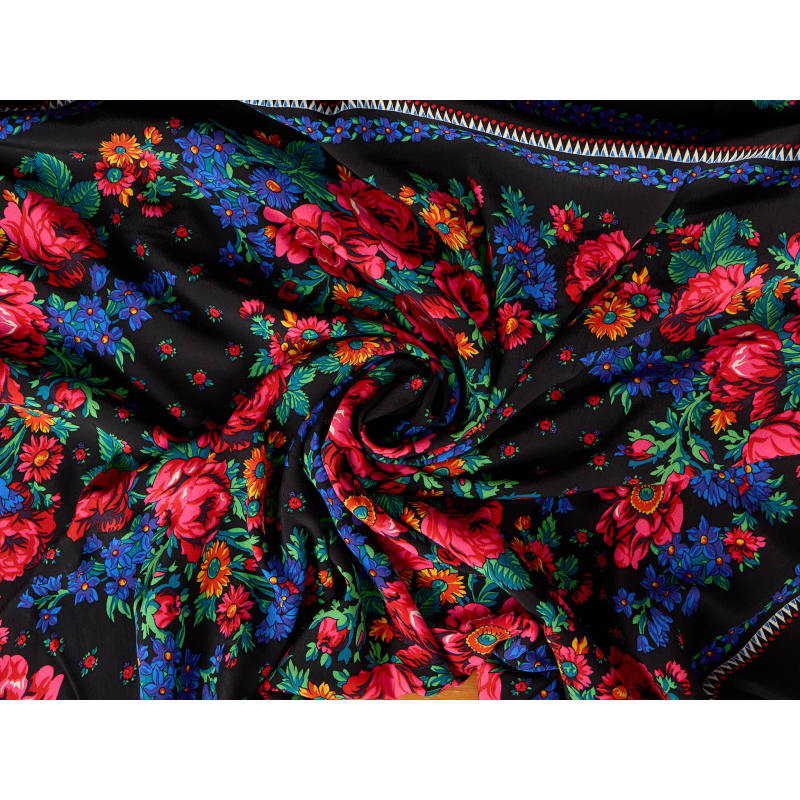
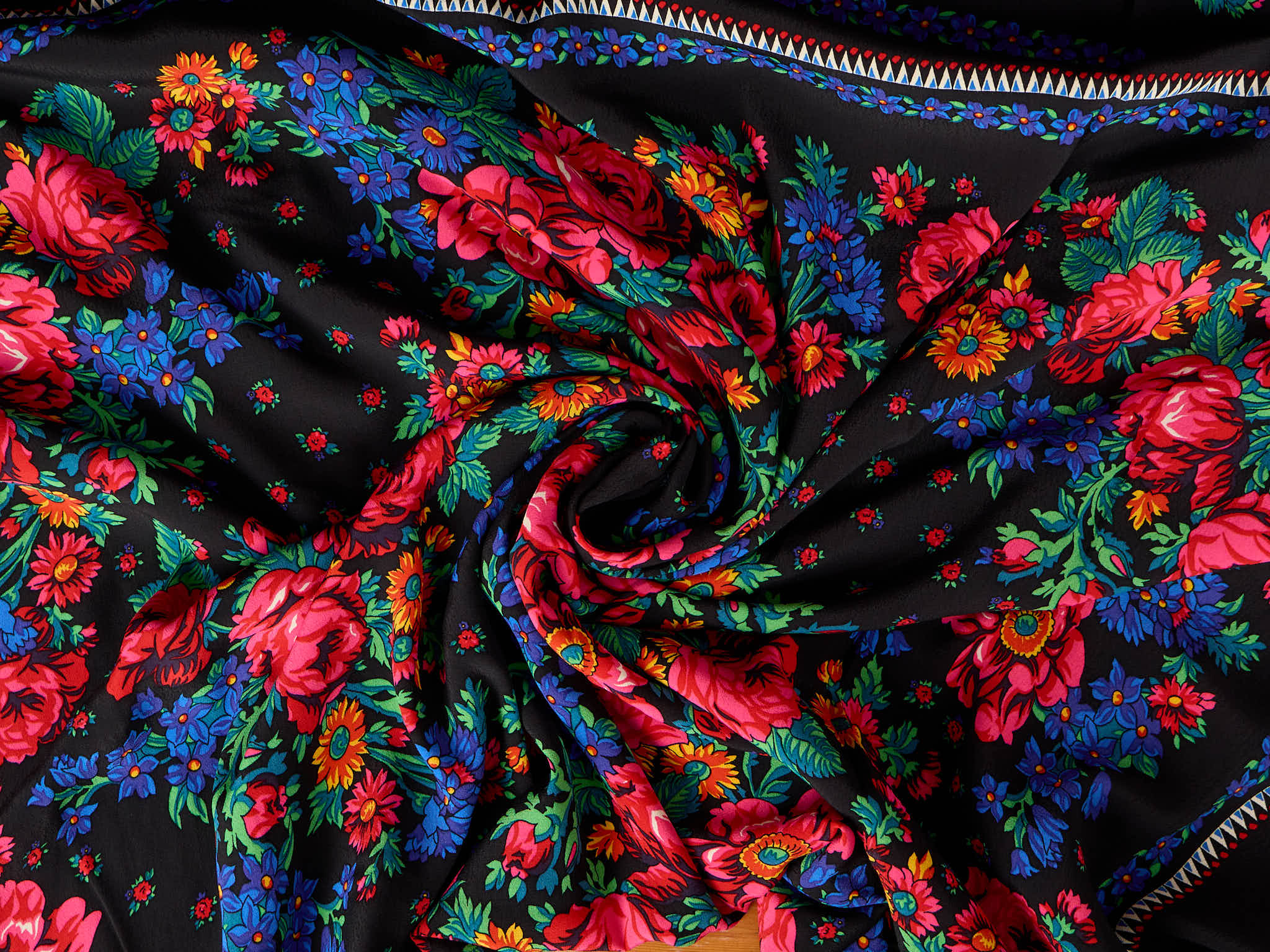
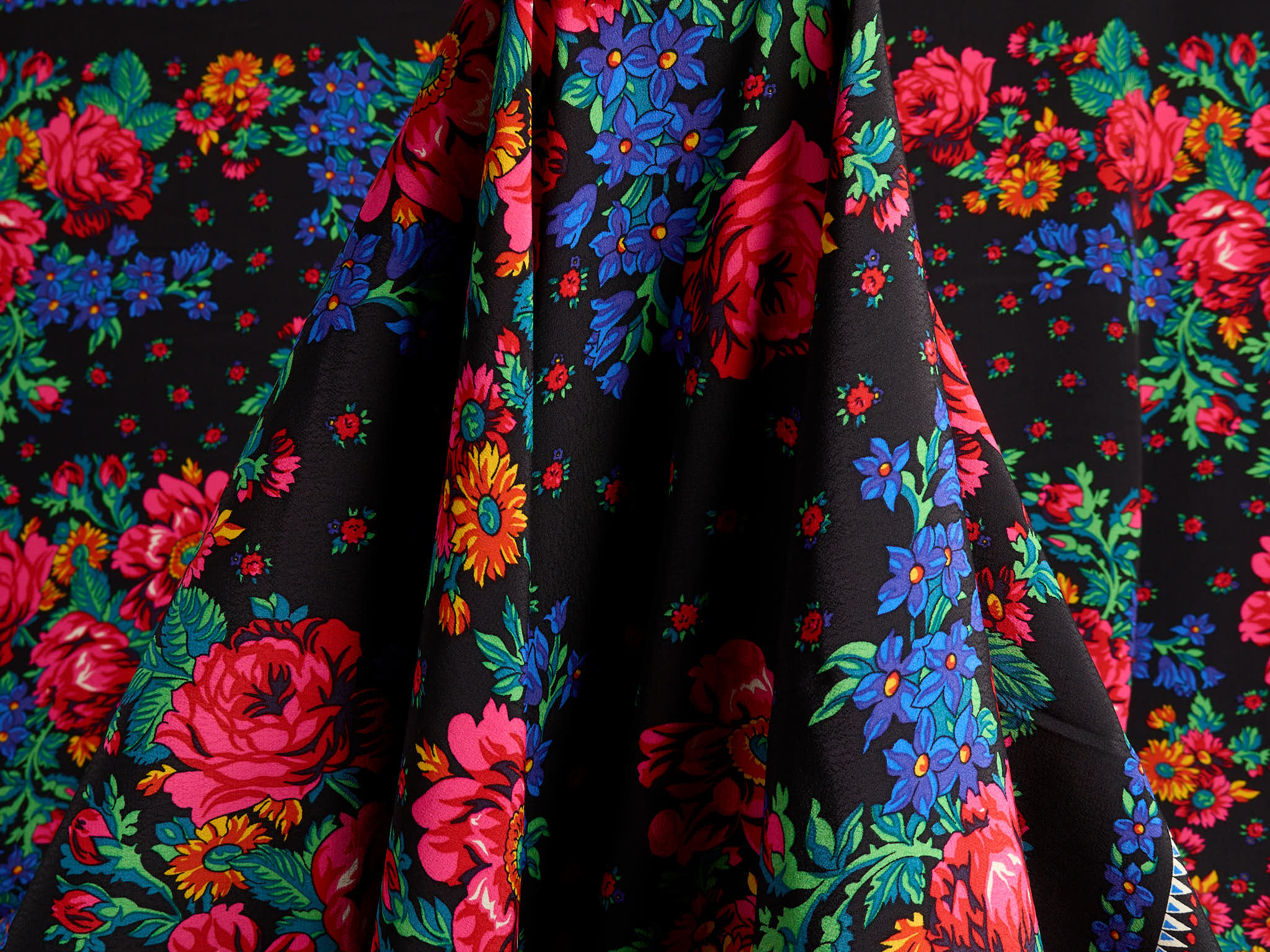
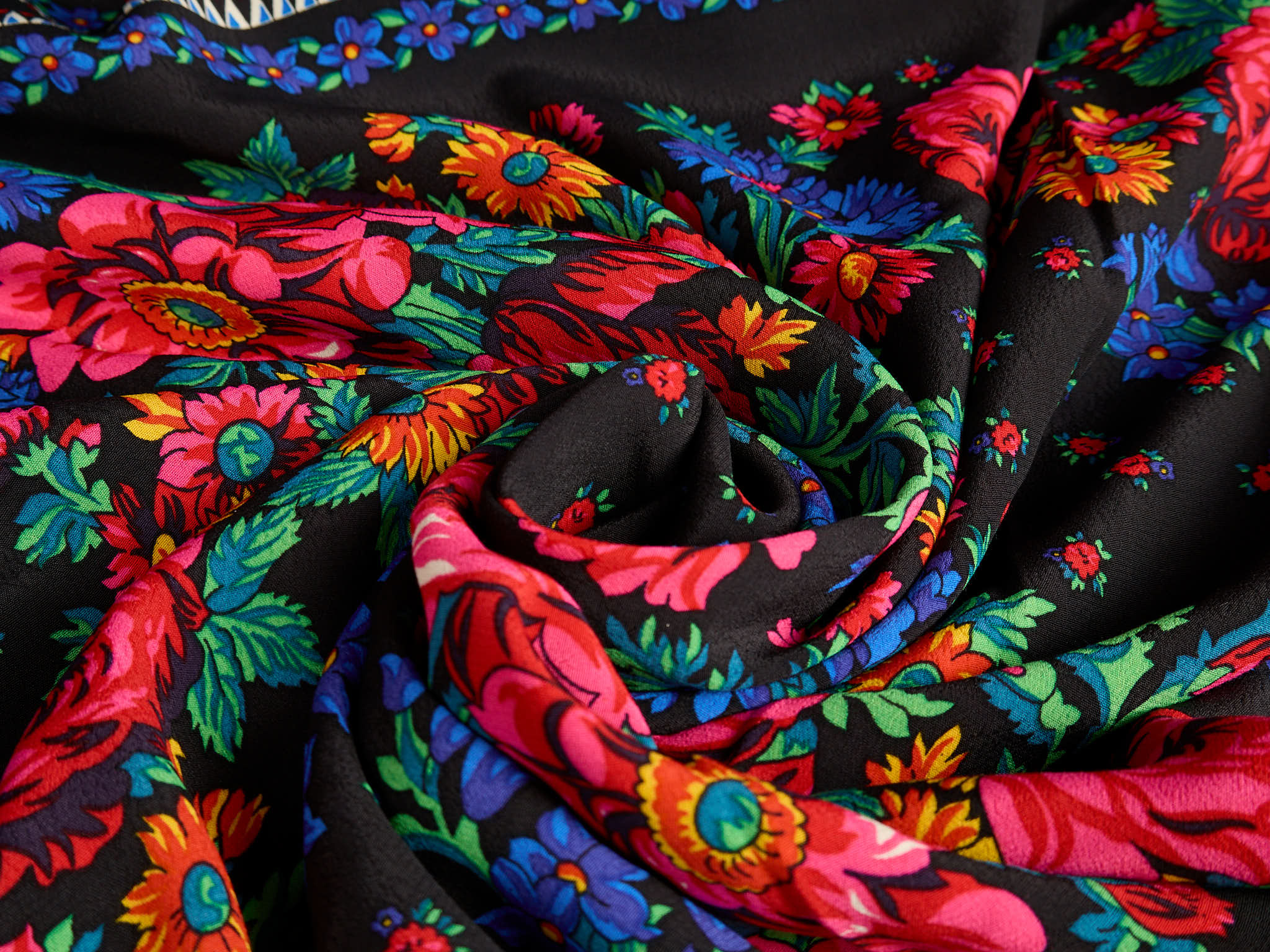
Viscose fabric for a dress with a floral pattern in a folk style, meaning viscose crepe, which looks as if it has a touch of music from a folk fair—only in an elegant version. This is a fabric with a soft, slightly grainy feel, a matte finish, and a clear ability to drape into neat waves. Category? Viscose crepe—ideal when you want a dress that moves on its own, rather than waiting for someone to “arrange” it.
As 100% viscose, the fabric has a pleasant softness to the touch and breathes well in warm season. Its viscose character makes the material flexible, though it is not “springy” like knitwear—thanks to this, designs with cut panels and seams look clean and feminine. Soft crepe gives a delicate, slightly crepon-like hand that emphasizes silhouette movement and allows for sensual draping. Its weight of 100 g/m² places it right in the “golden middle”: breathable, but not see-through in typical garment constructions, which you will appreciate both when sewing and when wearing.
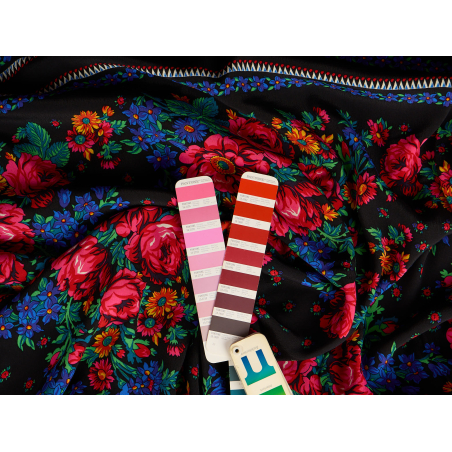
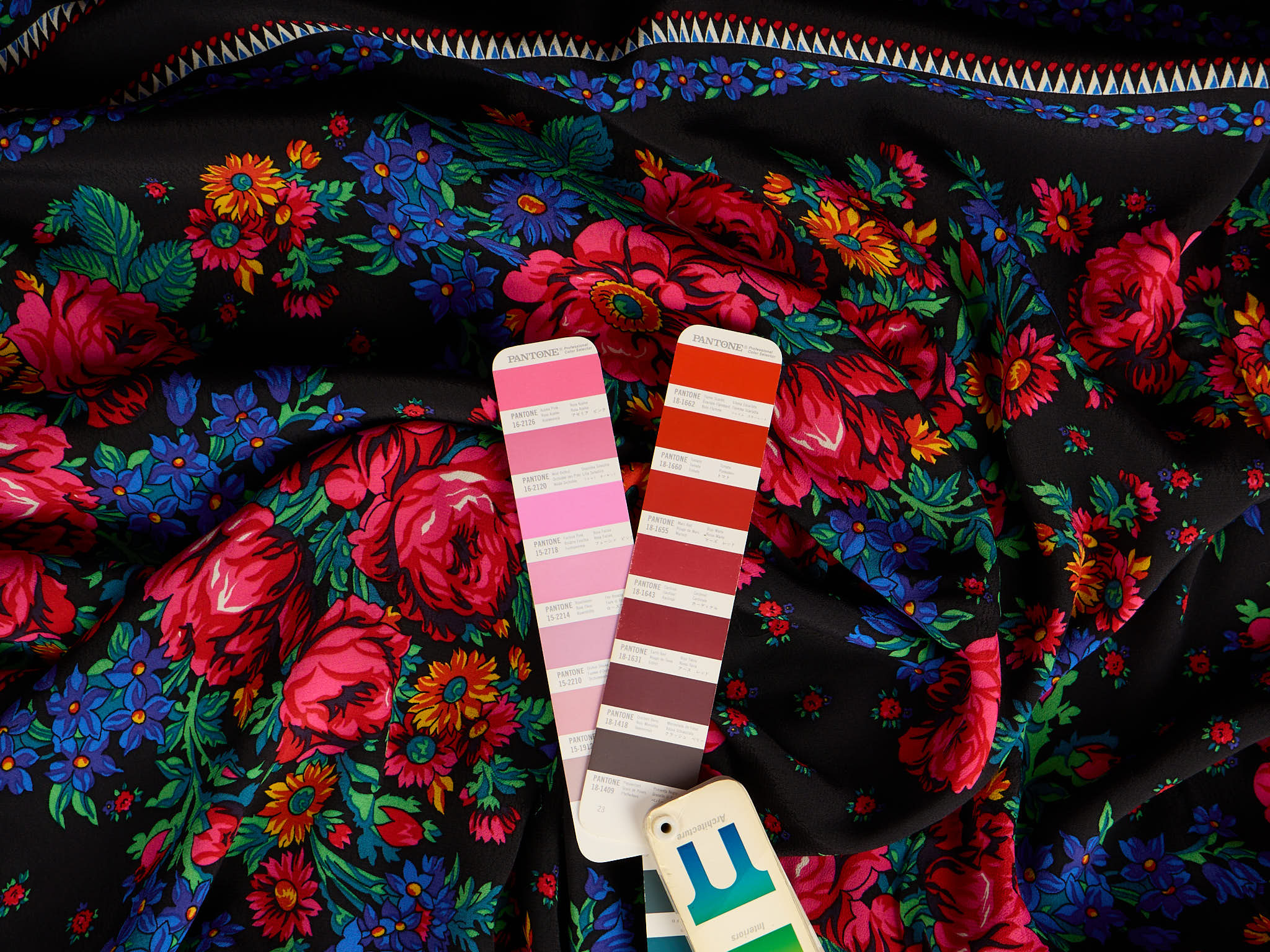
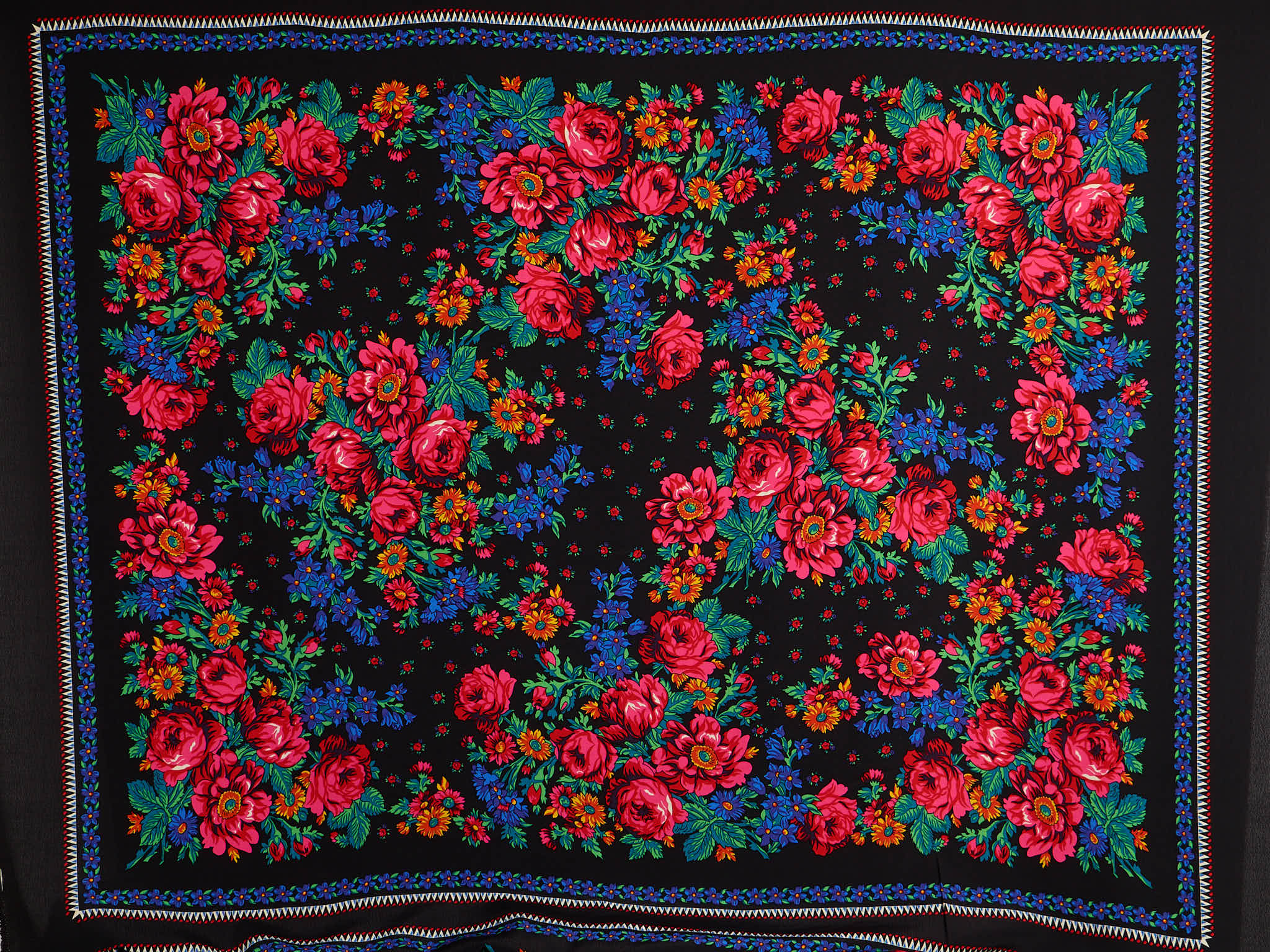
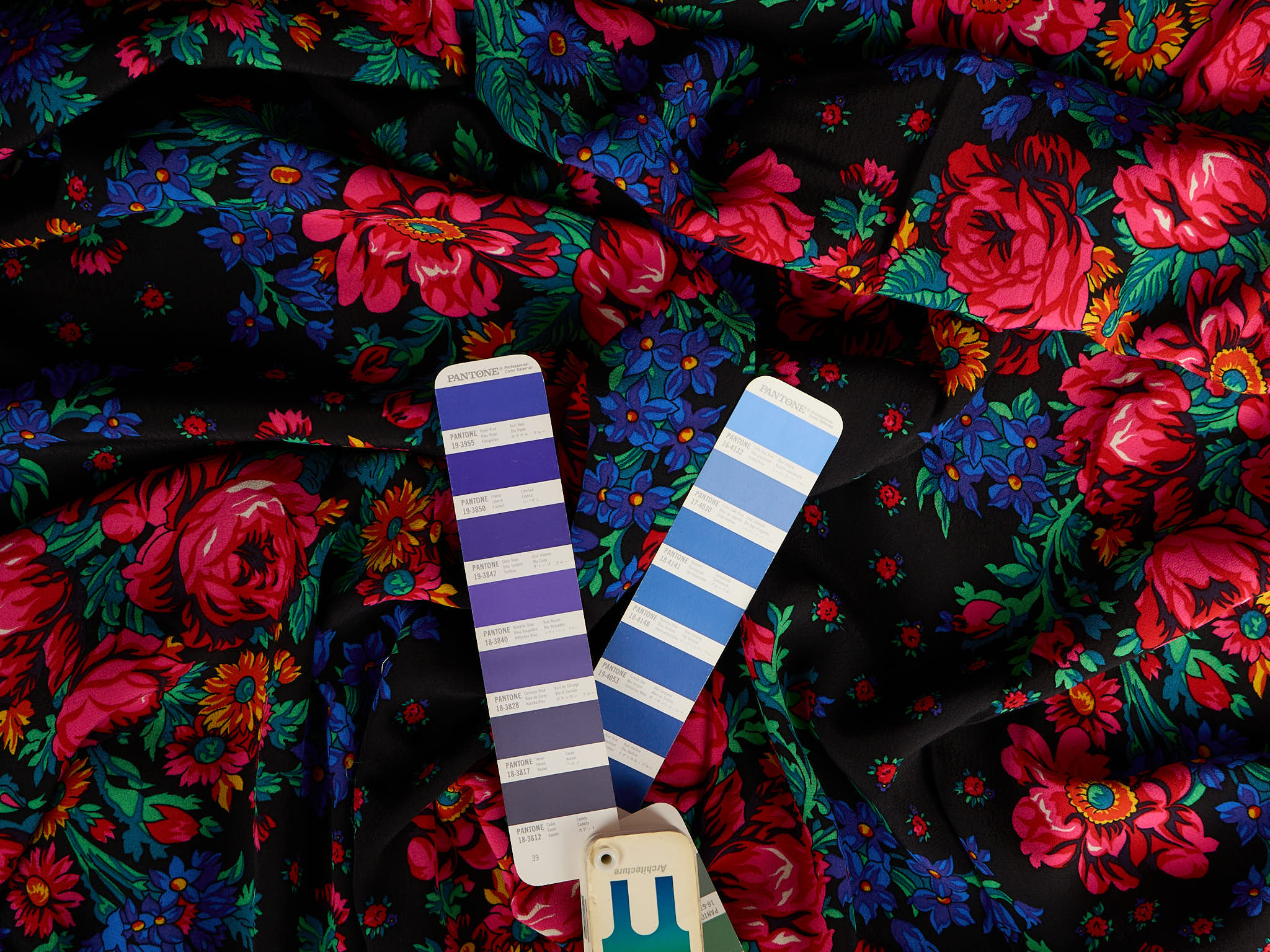
Against a deep black background, a report-style pattern with a length of one meter unfolds: dense, colorful flowers in a folk style, with distinct roses and bouquets of small blue and red flowers. The green of the leaves adds an “allotment/garden” character to the whole, and yellow-orange accents make the pattern come alive from every side. In a dress, this combination looks best when you let the fabric do the work and you do not “crush” it with a too stiff lining.
Because it is viscose, wash gently at temperatures up to 30°C using a delicate fabrics program. Avoid strong spinning and bleaching agents. Dry flat or hang on a wide rack, away from direct sun, so you do not lose its matte character. Iron at low temperature (about 110–150°C), ideally through a thin fabric and from the reverse side; if you use steam, do it carefully, because crepe likes to be treated “with class”.
This is a fabric that calls for dresses: both airy midi styles with flare, and wrap designs as well as styles with ruffles at the neckline. It is also great for skirts, looser blouses, or dresses with puff sleeves, because the softness of crepe helps in creating soft gathers and nice rounded shapes. Thanks to its matte finish, the folk pattern looks elegant even when the floral outlines are very intense.
Soft viscose crepe is one of the better materials for summer dresses. Due to its thermoregulating properties, viscose is very breathable and does not “burn” the skin. The weight of this viscose is light enough that you feel it like a delicate mist, and at the same time it is not see-through.
Yes, the fabric will lay out very well in pleats and ruffles, because it is quite fluid and will not stand stiffly like more rigid fabrics.
The width is about 140 cm; it is enough for one length in simple styles and up to the size where, in the cut, we do not need two lengths.
Yes, this is a repeat pattern, more like scarves in a rectangle. One repeat is 1 m long and about 1.40 m wide, which means that the fabric is woven and purchased by the repeat. It is worth considering where a given repeat element will be located in the pattern piece. It is good to take a repeat allowance for any changes to the style :)
We recommend washing on the wrong side on a delicate program in cool water (summer water).
It is best to spin the viscose as little as possible and dry it well spread out—then we minimize the need for strong ironing. If we want to iron it anyway, then on one to two with gentle steaming, or using a steamer only.
Data sheet

Viscose fabric for a dress, floral pattern in folk style - report
Width: 140 cm
Repeat: 100 cm
Weight: ~100 g/m2 ; ~140 g/mb
Composition: 100% viscose