


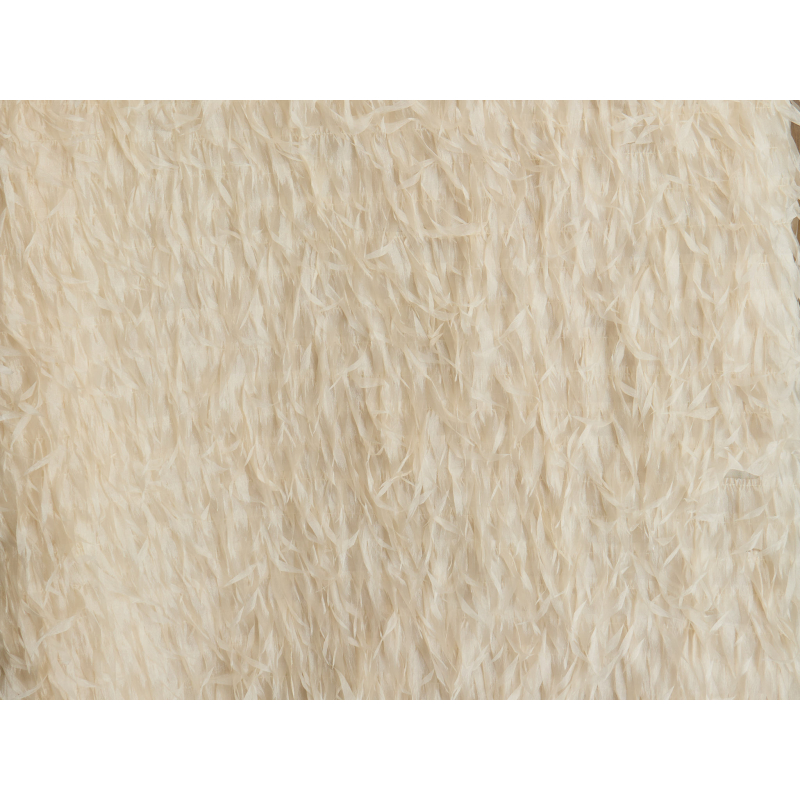


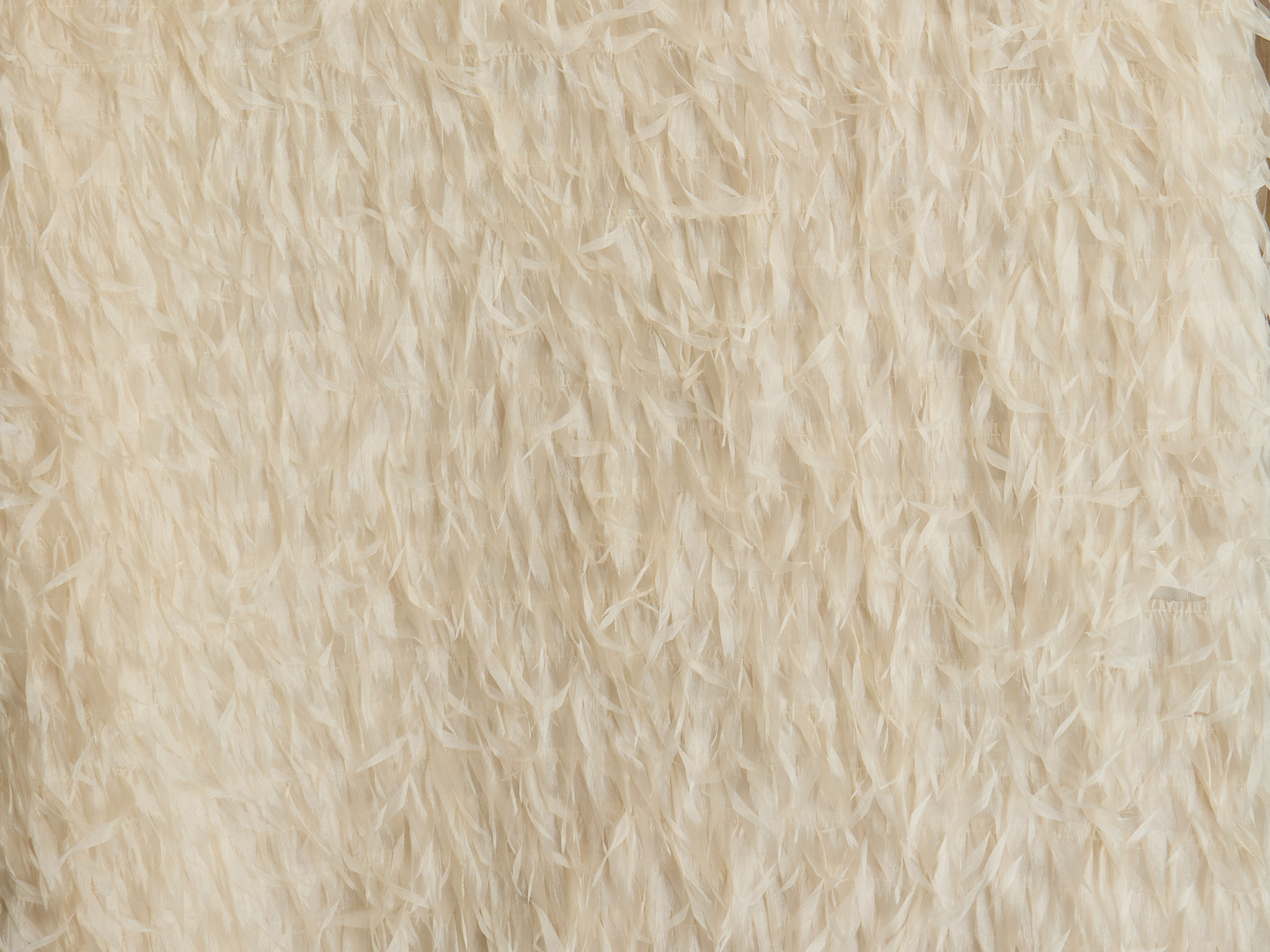


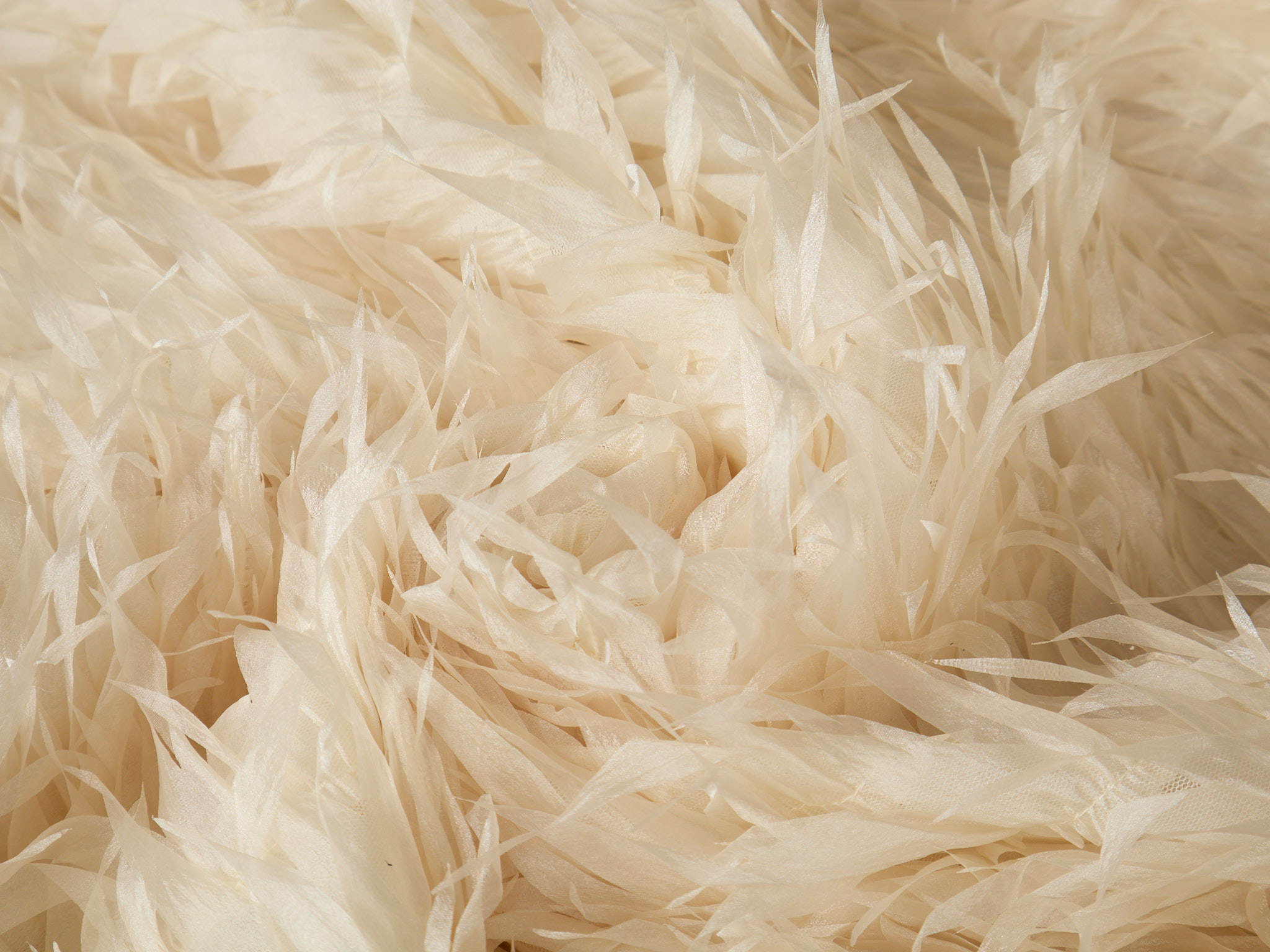
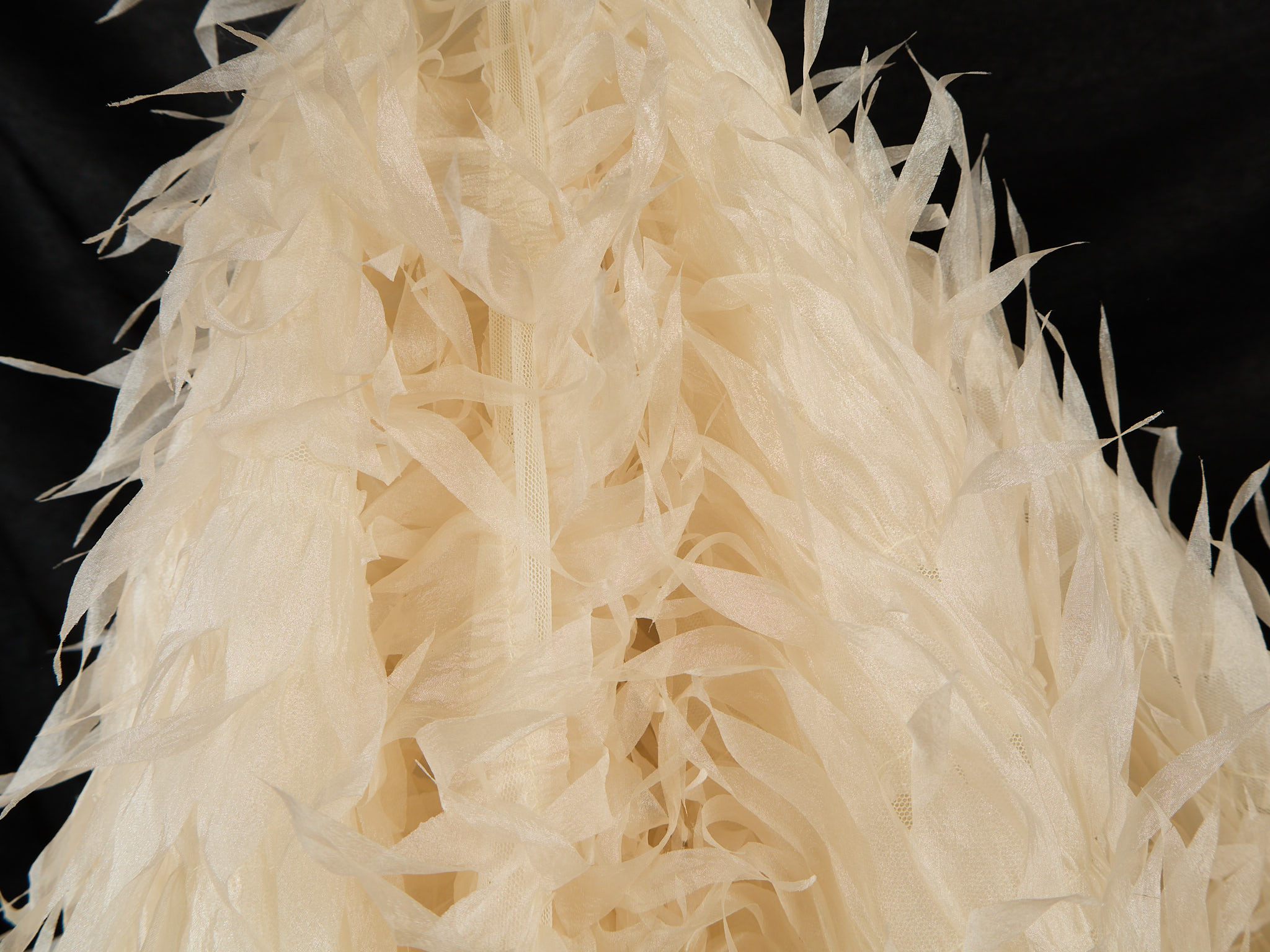
Material with sewn-on feathers from organza
Width: feathers 90 cm, tulle 160 cm wide
Weight: ~150 g/m2 ; ~240 g/mb
Composition: 100% polyester
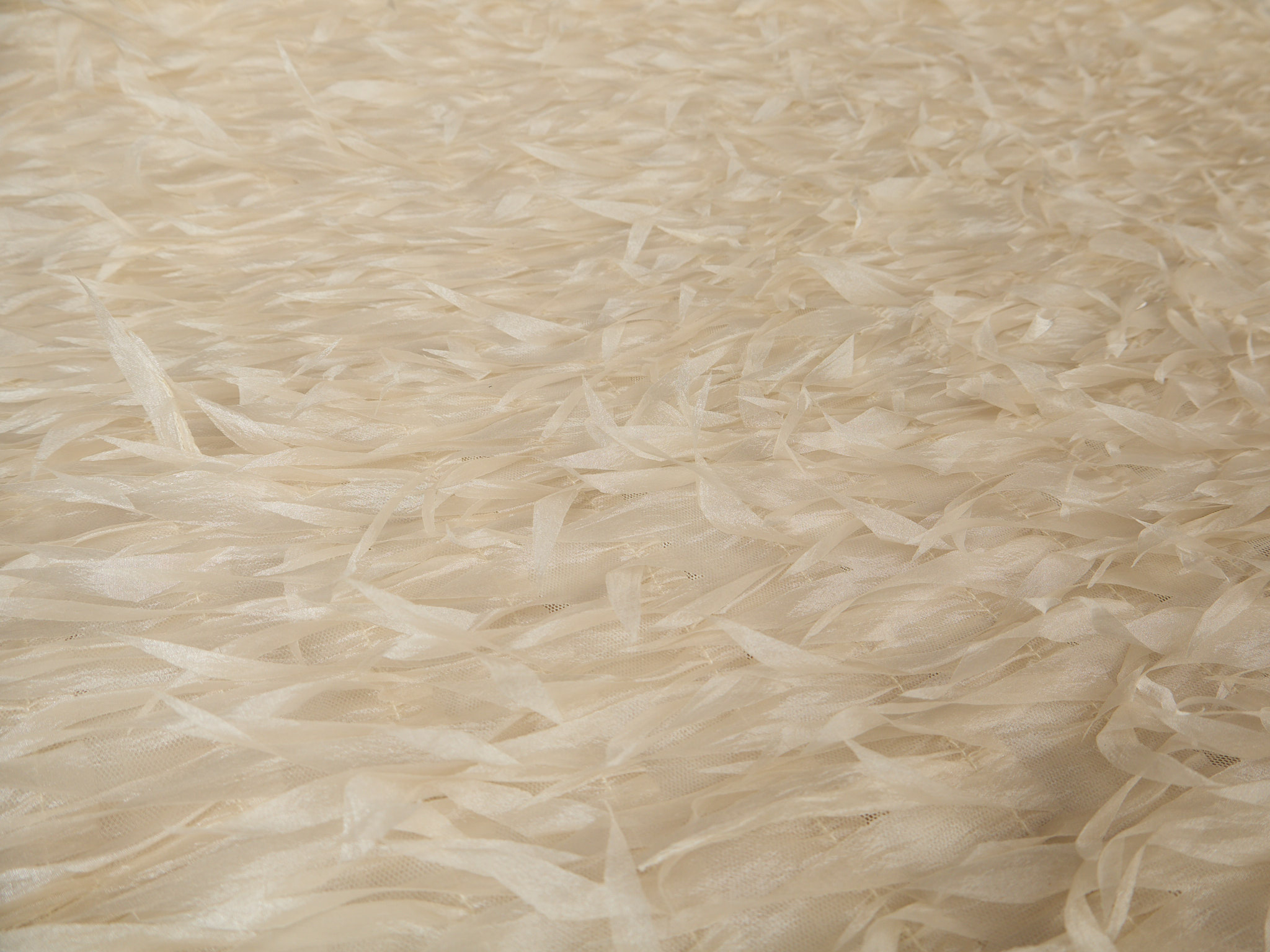
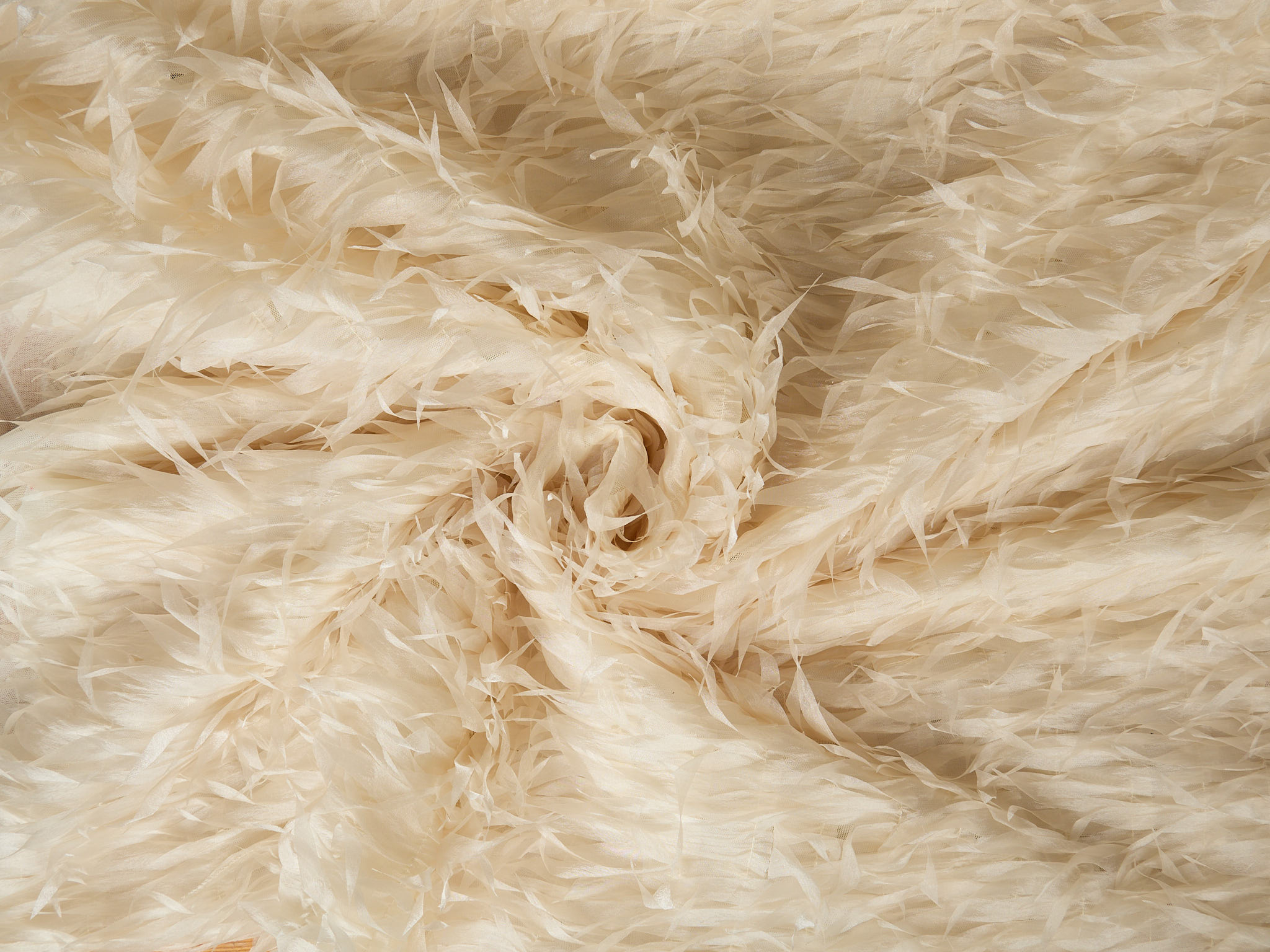
The material with embroidered feathers made of organza is a fabric that looks like a miniature stage straight out of a fashion show. Against the background of tulle, decorative feathers sewn from a thin, slightly stiff fabric land in place, and the whole is finished with precise laser cutting. This is a classic for those who do not want a “common accessory,” but an effect that is visible from far away. Our category is feathers—but in practice it is a decorative layer for creations that provides volume, a shine to the texture, and that characteristic fashion-like sparkle.
The 100% polyester composition makes the fabric durable, springy in the sense of “holding its shape,” and easy to work with. The 150 g/m² weight provides a pleasant balance: it is not “fluff for nothing,” but a stable, layered structure with a noticeable stiffness. Tulle ensures visual lightness and good air circulation, while the sewn-on feathers create a three-dimensional relief that beautifully catches the light during movement. The laser finish helps keep clean edges and maintains the aesthetics of the cut.
The pattern is created by sewn feathers arranged on a tulle backing, so the surface looks like a rippling cloud of texture. The feathers are made so that their outlines are clear, and the light highlights the “feathered” depth. Available colors: creamy beige, black, and beautiful Indian red—in the design, black adds drama and elegance, beige provides romantic lightness, and Indian red makes a strong accent.
Polyester feathers and tulle are best washed at 30°C in a delicate cycle, without bleach. We wash carefully to avoid fraying the appliqués, then dry flat or on a hanger in the shade. If ironing is needed, it should be done at low temperature and preferably through a protective fabric, so as not to melt the structure and not to “flatten” the effect.
This material loves decorative forms: overlay throws, capes, boleros, flounces, layered skirts, and long evening gowns. It also works for elements such as collars, cuffs, appliqués on the front, and as an eye-catching overlay for wedding dresses. A great choice for models where movement, volume, and a distinctive detail matter—such as in cuts with soft pleats and flowing effects.
Best is gentle hand washing in lukewarm water, a delicate hand-washing detergent, and quick washing with quick rinsing. Gently shake the material off to remove water, and dry flat.
The feathers are made of thin laser-cut organza and formed into ribbon strips sewn onto the tulle, so there is rather minimal risk of something coming off; the feathers do not pill.
The laser finish of the feathers gives us beautiful feather edges and ensures they will not fray. You can cut it freely using dressmaker’s scissors.
The material is slightly elastic and works (moves). When sewing in the lining, it is best to remember that the lining should also be able to work.
Precisely, the fabric includes 50 cm of tulle from the edge, then at 90 cm the feathers are sewn, and there are 20 cm of tulle up to the second edge. The fabric should be calculated by perimeter, because the feathers run along the tulle.
This tulle with feathers will be best for monochrome or ton-in-ton creations; it works in long gowns as a bottom part, or in light overlays as a bolero.
Data sheet

Material with sewn-on feathers from organza
Width: feathers 90 cm, tulle 160 cm wide
Weight: ~150 g/m2 ; ~240 g/mb
Composition: 100% polyester